
Felix Nowak
Senior Robotics Engineer - Kinematics & Desig

Jae Yun
Mechanical Engineer - Robotic Load Analysis

Kim Ji-han
Research Engineer (R&D Engineer) in Robotic Manipulation

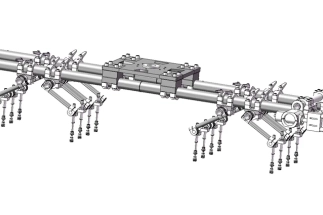
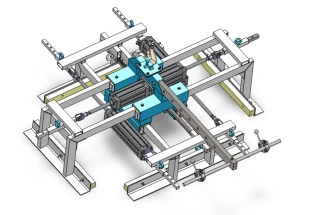
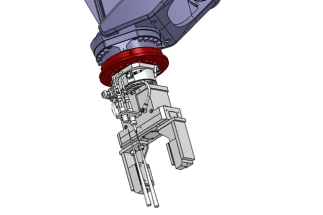
Robotic joint design accounts for backlash and thermal drift; actuators — pneumatic, electric or hydraulic — are sized against payload, duty cycle and response time, and cross-checked against the arm's own robotic arm calculations so end-effector mass and inertia are never an afterthought.
Force-torque sensing feeds a closed-loop feedback system for grip regulation, tuned for delicate work like electronics assembly as well as industrial loads up to 500 kg.
Passive and active compliance in the grasping mechanism absorbs part-presentation tolerance without overloading the arm flange — used on pick-and-place work needing better than ±0.1 mm repeatability.
Structural load distribution is resolved at the geometry level, with wall sections sized to rated fatigue life and every design validated to 5 million cycles before drawings are released.
Every robotic gripper design project closes with a complete, ready-to-manufacture file set — no follow-up purchases, no missing formats.
Delivered from offices in Amsterdam, Detroit, Stuttgart, Singapore, Tokyo and Seoul, with compliance packages engineered for North America, the EU, Japan, Korea and China.
Designs for US and Canadian sites follow ANSI/RIA R15.06-2012, with ASME BTH-1 structural calculations and a full liability documentation set included.
CE-marked to Machinery Directive 2006/42/EC and ISO 10218-1:2011, with GDPR-compliant paperwork and optional TÜV Rheinland certification.
Space-constrained layouts are designed to JIS B 8433, with KC certification support for Korean deployments and local support from our Tokyo, Seoul and Singapore contacts.
GB-aligned documentation is included, with local component-sourcing alternatives listed in the bill of materials.
Every robotic gripper design project runs on a fixed price agreed before work begins, with milestone reviews at each stage and full IP transfer on completion.
